What you pay, and from when
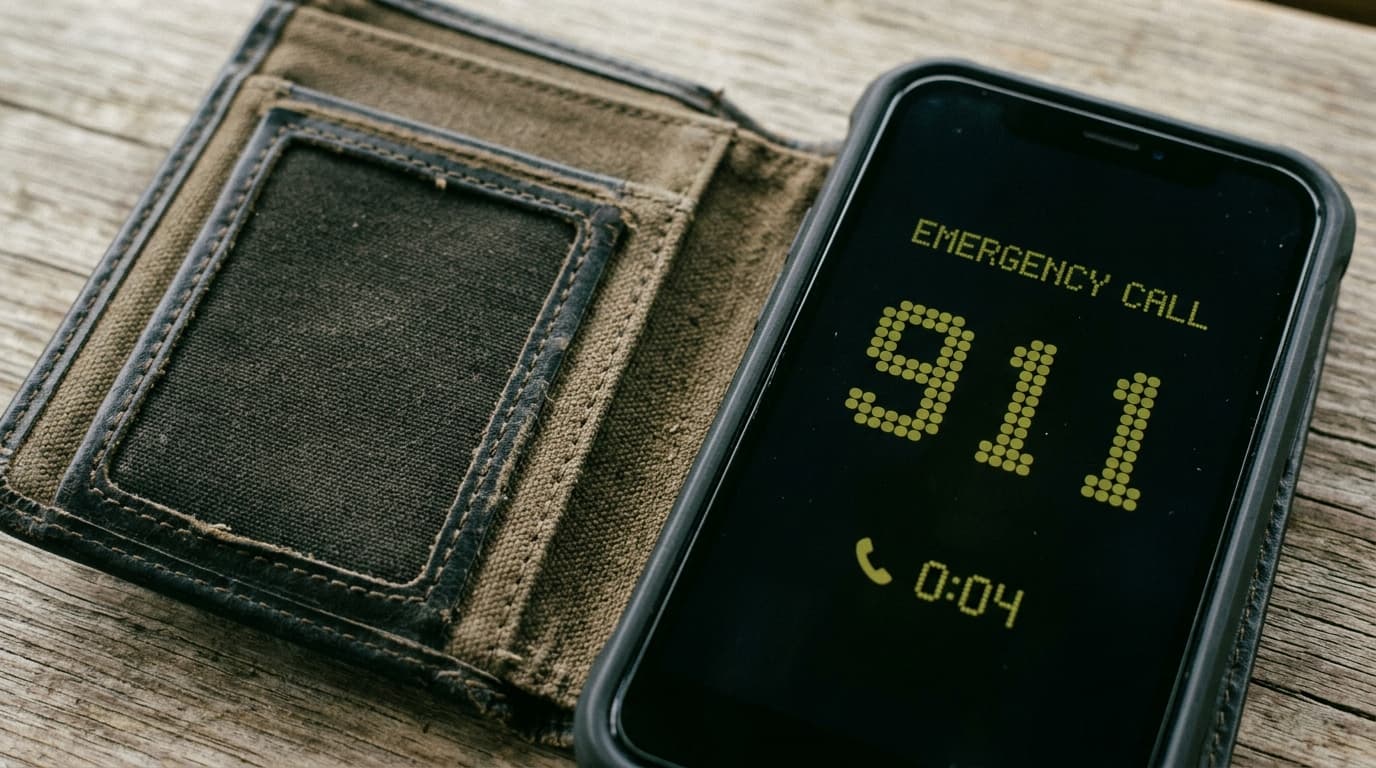
A call to 078 170 170 stops everything. Charges made after that call are not yours to bear. Charges made before it are, up to a maximum of EUR 50 — and often zero. It is the issuer that has to prove otherwise, not you.
I spent seven years in the disputes and chargeback department of a Belgian card issuer. In the files I handled, the first line was always the same: the timestamp of the call to Card Stop, the interbank blocking service used by every Belgian bank. Everything else in the file was read against that hour. The holders who lost money were almost never the careless ones. They were the ones who waited.
What should you do in the first ten minutes?
Block, then report. In that order, and without hunting for the card in between.
Three actions, each with its own reason. One: call Card Stop on 078 170 170. Two: if the card was stolen, report it to your local police within 24 hours and note the report number. Three: notify your issuer in writing and ask for the list of transactions since the last one you recognise.
Many Belgian banks now let you block a card from their app, in a few taps. That is faster than a call, and it is valid. But an in-app block only covers that issuer's cards: if your wallet held a debit card from one bank and a credit card from another, you need either two apps or one call to Card Stop.
What the brochure does not put forward: hunting for the card for twenty minutes before calling costs you nothing if nobody uses it, and up to EUR 50 if somebody does. The whole difference in risk between the two behaviours sits in those twenty minutes.
Which number do you call in Belgium to block a card?
Card Stop, on 078 170 170, or +32 78 170 170 from abroad. The service runs 24 hours a day, seven days a week, in French, Dutch and English.
The figure to remember: since 10 January 2022 this number has replaced the old 070 344 344, which was charged at EUR 0.30 a minute. The 078 line is a standard-rate number, with no surcharge. The old number stayed reachable during the transition, but it is the new one to store, with the international dialling code: a wallet is stolen abroad more often than at home.
Card Stop is operated by Worldline on behalf of the Belgian banking sector, and it does not block cards alone. The list covers debit cards, credit and prepaid cards, electronic meal vouchers, and Bancontact Pay, Google Pay and Apple Pay.
Who pays for the charges made before your call?
You do, up to a maximum of EUR 50, and only if the issuer can establish that you neither acted fraudulently nor were grossly negligent. Above that ceiling the loss is the issuer's.
The regime comes from Book VII of the Belgian Code of Economic Law (Livre VII du Code de droit économique), which transposes the European payment services directive (PSD2) into Belgian law. It splits the timeline in two, and one date decides everything: the notification.
| Situation | What you bear |
|---|---|
| Charges after the call to Card Stop | Nothing |
| Charges before the call, no fault on your side | EUR 50 at most |
| Counterfeited card | Nothing, including before the call |
| Number used remotely, without electronic identification | Nothing, including before the call |
| Gross negligence proven by the issuer | The full amount |
| Fraudulent conduct by the holder, proven by the issuer | The full amount |
Source: Wikifin, the information site of the FSMA, page updated on 27 March 2025.
The second and third rows are the ones holders miss most often. An online purchase settled with your card number, with no code and no 3-D Secure, does not fall under the excess: you bear nothing, including for transactions made before the block.
What is gross negligence, and who has to prove it?
The issuer. Belgian law does not define gross negligence, and whoever invokes it has to establish it — never you to prove that you were careful.
The two examples Wikifin gives are the PIN written on the card itself and a code as simple as 1234. What the issuer looks at first: the match between where the theft happened and where the transactions happened, the interval between the two, and how many code attempts preceded the first successful transaction. A withdrawal accepted on the first attempt, ten minutes after a theft on a café terrace, opens a discussion. The same withdrawal on the third attempt closes it.
The refusal ground I saw invoked most often was the code kept in the wallet, on a slip of paper or in a notebook. It holds when the issuer produces evidence of it, and it does not hold when the issuer merely assumes it. Use of the card with the correct code is not enough on its own to establish gross negligence: that is exactly what the allocation of the burden of proof prevents.
How long do you have to contest a charge?
Thirteen months from the debit date, and without undue delay from the moment you become aware of it. The two conditions stack.
The FPS Economy sets out the principle: after a prima facie check, the issuer must immediately refund the amount of the unauthorised transaction and restore the account to the state it would have been in. Refund first, examine afterwards — the order is not incidental, and it is the one the law imposes.
In practice, the thirteen-month window turns on an ordinary habit: reading the monthly statement. On a credit card, a EUR 24.90 charge from a merchant with a generic name crosses three statements without anyone stopping on it. That is the typical amount of fraud by small repeated debits, and it is also the one holders discover after the deadline.
What can you do if the issuer refuses to refund?
Three steps, in order, and none of them costs money before the last.
Write to the issuer's complaints department first, keeping a dated copy. Without an agreement, take it to Ombudsfin, the Belgian ombudsman for financial disputes: the procedure is free. As a last resort the dispute goes before the justice of the peace or the court of first instance, depending on the amount at stake.
Those are the only routes. No debt collection firm, no paid intermediary, no "funds recovery" platform has any competence here — and approaches of that kind, in the weeks after a fraud, are themselves most often fraudulent.
What replacing the card will cost you
A blocked card is a card to replace, and replacement is not always free. It is the item I saw contested right after the charges themselves, and almost never successfully: it sits in the pricing conditions, and it is applied correctly.
Before comparing a replacement charge, look at the three figures that actually weigh over twelve months.
| Card | Annual fee | APR on carried balance | EUR 100 withdrawal |
|---|---|---|---|
| Buy Way Mastercard | EUR 0 | 14.50 % | EUR 6.50 |
| Beobank Visa Classic | EUR 5 | 14.49 % | EUR 5.00 |
| Argenta Mastercard (Green plan) | EUR 24 (EUR 2/month) | 9.50 % | EUR 6.00 |
| KBC Mastercard Silver (with Plus Account) | EUR 36 (EUR 3/month) | 9.49 % | not published in the grid |
Rates recorded from the issuers on 18 August 2026. The Buy Way Mastercard has not been offered to new retail customers since 1 November 2022: it appears here because tens of thousands of Belgian holders still carry one.
Over twelve months that is a EUR 36 gap between the first and the last row on the annual fee alone, and five percentage points of APR on a carried balance. A replacement charge, by contrast, is paid once. The breakdown of the annual cost takes the four items one by one.
The ranking of Belgian credit cards gives these amounts card by card, the comparison tool places them side by side, and the choosing a card page sorts by situation.
Sources — Card Stop, number and blocking scope: cardstop.be, consulted on 19 August 2026. Number change on 10 January 2022 and the warning on fake calls: Febelfin. The EUR 50 excess, its exceptions and the burden of proof: Wikifin (FSMA), page updated on 27 March 2025. Refund obligation and contestation window: FPS Economy, Book VII of the Code of Economic Law. Free recourse: Ombudsfin. Card rates recorded on 18 August 2026 from the published pricing pages of Beobank, Argenta, Buy Way and KBC. No link in this article is remunerated.
Comparator
Compare cartes de crédit side by side.
Compare now →
Frequently asked questions

Delphine a passé sept ans au service litiges et rétrofacturation d’un émetteur de cartes belge, à Liège, entre 2015 et 2022 : le bureau où atterrissent les contestations de porteurs, les retraits facturés deux fois et les cautions d’hôtel qui restent bloquées trois semaines. Elle a donc lu, ligne par ligne, plusieurs milliers de relevés de cartes belges, et elle sait où se logent les montants que personne ne regarde avant de signer. Depuis 2023 elle relève chaque trimestre les tarifs publiés des émetteurs belges et tient le tableau de coûts qui sert de base à ce site. Ce qui l’agace : les brochures qui annoncent une carte à 0 € sans mentionner que le premier retrait au distributeur coûte 5 € fixes plus 1,8 % de commission, et que les intérêts courent dès le jour du retrait.