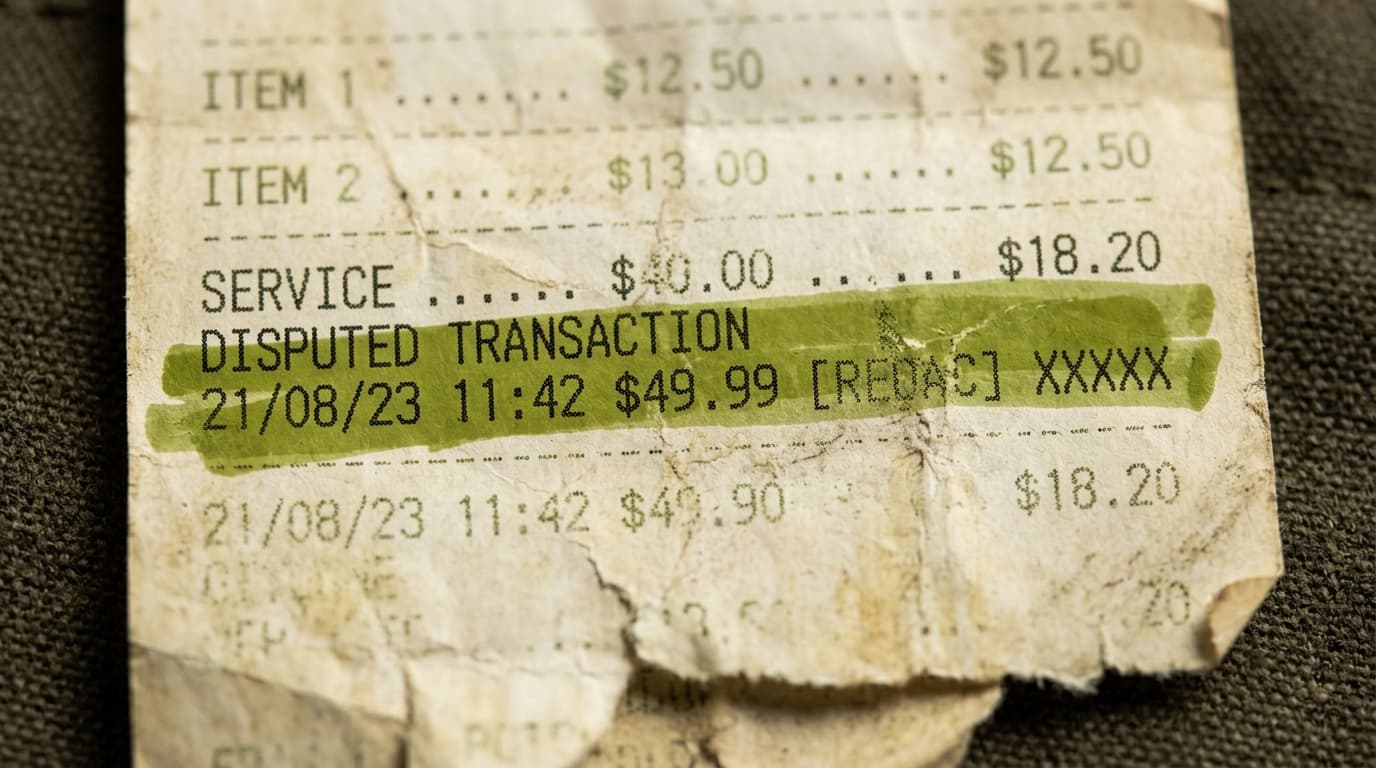
American Express is neither a Belgian bank nor an open network like Visa or Mastercard: it is the issuer and the network at once, regulated directly by the National Bank of Belgium. The Green card costs EUR 65 a year, with no APR, and a disputed charge follows a deadline of its own, different from that of an ordinary Belgian bank card.
How does an American Express card work in Belgium?
American Express does not issue through a Belgian bank. The company collects the fee itself, sets its own rates, and also runs the merchant acceptance network. Visa and Mastercard work differently: they are open networks, and it is banks such as KBC, Belfius, BNP Paribas Fortis, ING or Argenta that issue the card, set its rates, and handle day-to-day disputes.
Under its own general terms (article 25, part 3), American Express operates in Belgium as a payment institution, licensed and regulated directly by the National Bank of Belgium, the country's financial supervisor. That status changes, in practice, who picks up the phone when something goes wrong: not a separate Belgian bank, but American Express itself, at every step of the file. The issuer's official fee schedule sets out the annual fees listed below.
| Card | Annual fee | APR | Rate recorded on |
|---|---|---|---|
| American Express Blue | EUR 35 | none, no revolving credit | 25 September 2026 |
| American Express Green | EUR 65 | none, no revolving credit | 25 September 2026 |
| American Express Gold | EUR 240 | none, no revolving credit | 25 September 2026 |
| American Express Platinum | EUR 780 | none, no revolving credit | 25 September 2026 |
Rate card in force since 1 February 2026, per the official fee and charges document. The invitation-only Centurion card adds a one-time EUR 4,000 enrolment fee on top of its EUR 4,000 annual fee: it is left out of the table because it cannot be requested directly.
How much does a EUR 100 withdrawal cost on an American Express?
EUR 4.50. Cash withdrawals, branded Express Cash at American Express, cost 3.5 % of the amount withdrawn with a EUR 4.50 minimum. On a EUR 100 withdrawal, 3.5 % comes to EUR 3.50, below the minimum, so EUR 4.50 is charged instead.
For comparison, the same withdrawal costs EUR 6.00 on an Argenta credit card and EUR 5.00 on a Beobank Smart Travel Mastercard, rates recorded from those issuers on 25 August 2026. Over twelve months, one withdrawal a month at EUR 4.50 adds up to EUR 54.00, close to the Green card's entire annual fee.
The brochure leaves out one point: the 2.5 % foreign exchange fee applies as soon as a merchant bills outside the euro area, not only on a trip overseas. A payment in pounds sterling or Swiss francs carries the same fee as one in US dollars.

Is American Express a credit card under Book VII?
No, not for the four standard cards. The monthly balance is charged in full on the statement date, so there is nothing to carry forward, and with no carried balance there is no credit facility and no APR to disclose. The contract falls under payment services, not the consumer credit rules of Book VII of the Belgian Code of Economic Law.
In the files I handled, this confusion came up every time a late payment triggered a reminder: a cardholder convinced they were repaying a credit line, when they were only settling a bill in arrears, with penalties that have nothing to do with a capped legal interest rate. The late payment penalty at American Express is 5 % of the amount due, with a EUR 20 minimum and a EUR 2,000 maximum, rate recorded on 25 September 2026. Past 90 days unpaid, outsourced debt collection adds 8 % of the outstanding balance plus 10 % of the amount due, with a EUR 100 minimum.
A card that sits on a genuine credit facility does disclose an APR and does fall under Book VII: that is the case of the Beobank Smart Travel Mastercard, with a 14.49 % APR on the carried balance, rate recorded on 25 August 2026. Two network logos, two legal regimes that do not overlap.
How do you dispute a charge with American Express?
By calling American Express customer service directly, not a third-party bank. Since American Express is both the issuer and the network, there is no Belgian banking intermediary between your call and the decision to refund or not.
American Express then sends the merchant an urgent information request. The merchant must reply by post or fax, with proof of the transaction (a signed receipt, proof of delivery, proof that the charge was authorised), within fifteen days. American Express requires the merchant to keep that evidence for eighteen months.
| Situation | Deadline to act | Who handles it |
|---|---|---|
| Unauthorised charge (loss, theft, fraud) | as soon as possible, at the latest thirteen months after the transaction | American Express customer service |
| Unexpected amount on the statement (double charge, failed merchant, subscription not cancelled) | eight weeks from the date of the relevant statement | American Express customer service |
| Complaint left unresolved | no legal deadline set, but best not left too long | Ombudsfin, the Belgian financial ombudsman, free, non-binding opinion |
The issuer looks at two things first: how quickly you reported it, and whether the PIN was used for a transaction before the card was blocked. A cardholder who waits several months before flagging a subscription charged in error runs into the eight-week deadline, which is counted in weeks from the statement, not in months from the moment they noticed.
Who refunds a fraudulent charge, and what counts as gross negligence?
American Express refunds an unauthorised charge as soon as you report it, with a maximum excess of EUR 50, barring gross negligence on your part. That is the same cap as on a debit card or an ordinary credit card, because the legal regime for unauthorised transactions does not depend on the brand.
Five behaviours count as gross negligence under the card's general terms:
- not reporting the loss or theft as soon as possible
- not taking reasonable care to protect the card or its PIN
- not filing a police report within twenty-four hours of a theft
- never checking your account statement
- writing the PIN legibly on the card itself
One exception is worth knowing: if the PIN was extorted through violence or the threat of immediate danger, gross negligence is not held against you.
The three figures to check before taking out an Amex
Annual fee, APR and the date the rate was recorded: on an American Express card, the second figure is structurally absent, and that absence is information in itself, not a brochure oversight. What is left to compare is the annual fee, the cost of a withdrawal, and the dispute deadline, shorter here than on an ordinary Belgian bank card.
The ranking of Belgian credit cards sets out these amounts card by card, the comparison tool puts them side by side, and the article on debit card or credit card details how chargeback works on Visa and Mastercard.
Sources. American Express BELUX, fee and charges schedule, document dated 16 December 2024, in force from 1 February 2026, recorded on 25 September 2026. American Express BELUX, card general terms, articles 5, 7 and 25. American Express BELUX, disputed charges procedure for merchants. National Bank of Belgium, supervision of payment institutions. Book VII of the Belgian Code of Economic Law. Recourse where a dispute remains unresolved: Ombudsfin. Argenta and Beobank, rates recorded on 25 August 2026 (see the article on debit card or credit card). No link in this article is paid for.
Comparator
Compare cartes de crédit side by side.
Compare now →
Frequently asked questions

Delphine a passé sept ans au service litiges et rétrofacturation d’un émetteur de cartes belge, à Liège, entre 2015 et 2022 : le bureau où atterrissent les contestations de porteurs, les retraits facturés deux fois et les cautions d’hôtel qui restent bloquées trois semaines. Elle a donc lu, ligne par ligne, plusieurs milliers de relevés de cartes belges, et elle sait où se logent les montants que personne ne regarde avant de signer. Depuis 2023 elle relève chaque trimestre les tarifs publiés des émetteurs belges et tient le tableau de coûts qui sert de base à ce site. Ce qui l’agace : les brochures qui annoncent une carte à 0 € sans mentionner que le premier retrait au distributeur coûte 5 € fixes plus 1,8 % de commission, et que les intérêts courent dès le jour du retrait.